
Find Grant County Property Records
Grant County property records cover a vast stretch of eastern Oregon where about 7,000 people live. The county seat is Canyon City, and the Assessor's Office there keeps all property data for the area. Grant County has large ranches, timber tracts, and a handful of small towns. You can search for ownership details, assessed values, tax history, and survey records through the county offices. The Assessor also works with GIS mapping tools that show parcel boundaries and land features. This page will help you find and use Grant County property records.
Grant County Quick Facts
Grant County Assessor Office
The Grant County Assessor works from the courthouse in Canyon City. This office values all real property in the county each year and maintains the assessment roll. Staff track ownership, process exemption requests, and keep parcel maps up to date.
Assessment in Grant County follows ORS Chapter 308. The Assessor sets real market value based on sales data, cost factors, and income for each type of property. Grant County has mostly rural land, so the Assessor relies on a smaller pool of comparable sales than urban counties do. Ranch and timber sales are few and far between. The office must still set values that reflect what a willing buyer would pay. Each year, owners get a notice and can appeal if they think the value is wrong.
Visit the Grant County website for contact details and department information.
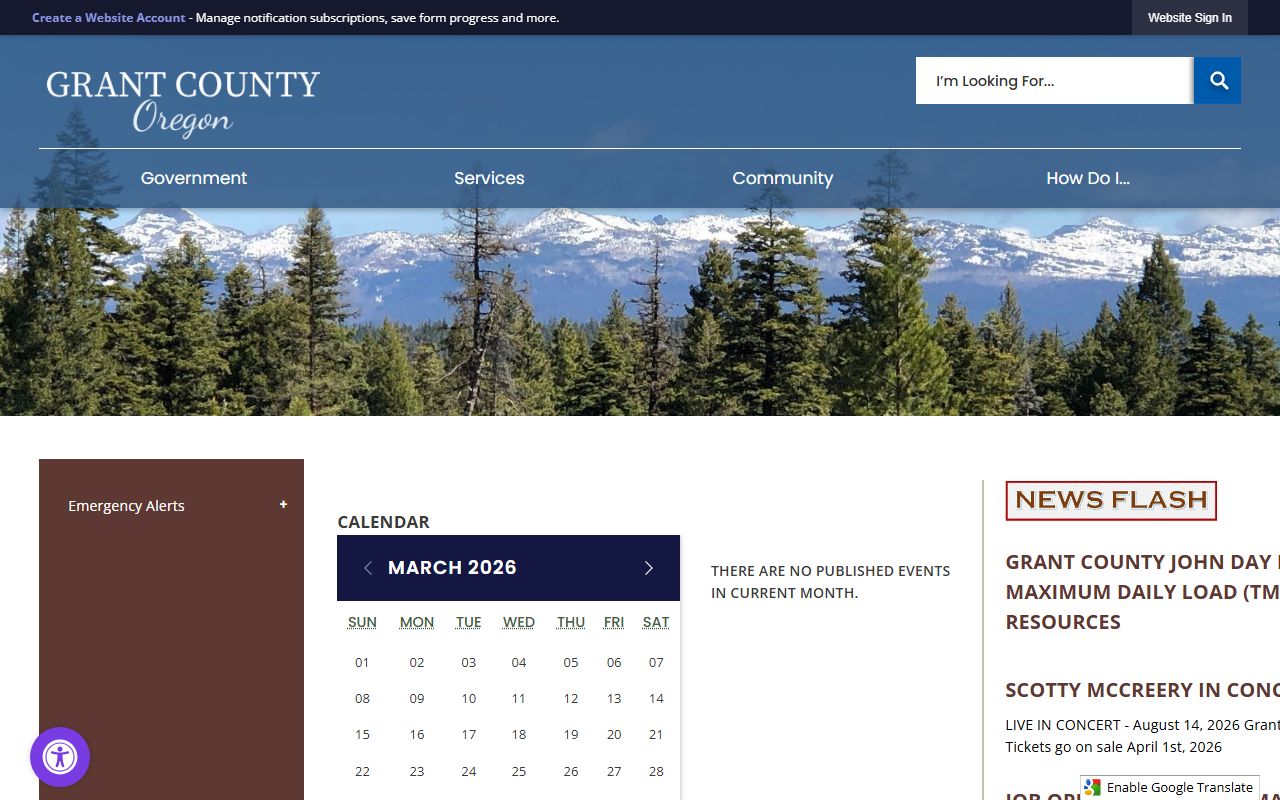
The Grant County site links to offices including the Assessor and Clerk.
| Office |
Grant County Assessor's Office 201 S. Humbolt Street Canyon City, OR 97820 Phone: (541) 575-1675 |
|---|---|
| Hours | Monday through Friday, 8:00 AM to 5:00 PM |
| Website | grantcountyoregon.net |
Search Grant County Property Data
The best way to look up Grant County property records is to call the Assessor at (541) 575-1675. Give them an owner name, address, or tax lot number. Staff can pull up the parcel and tell you the owner, value, and tax details. You can also drive to Canyon City and view records in person at the courthouse.
Grant County has GIS mapping tools that show parcels on a map. You can zoom in to any part of the county and click on a tax lot to see basic data. These maps are useful for rural areas where street addresses may not exist. The map shows lot lines, section and township markers, roads, and streams. For full assessment records, you still need to contact the Grant County Assessor.
Survey records are also on file at the Grant County courthouse. These include plat maps, boundary surveys, and corner records filed by licensed surveyors. If you need to know the exact boundaries of a parcel in Grant County, these survey records are the place to start. The Assessor's maps show approximate lines, but only a survey gives you legal boundaries.
Note: Many Grant County parcels use legal descriptions based on township, range, and section rather than street addresses.
Grant County Property Tax Records
Property taxes in Grant County average about $1,175 per year. This is well below the state average. Low land values and few taxing districts keep the rates down. Most of the tax base in Grant County comes from farm land, timber, and a few hundred homes in John Day, Canyon City, and the other small towns.
Tax districts in Grant County include the county government, school districts, fire districts, and a few special service areas. Each has a permanent rate limit under ORS Chapter 310. Local option levies are rare in Grant County. Your tax statement shows each district and how much of your bill goes to each one. The Tax Collector sends bills in the fall, and the first payment is due by November 15.
Late taxes in Grant County carry interest per ORS Chapter 311. Three years of missed payments can lead to foreclosure under ORS Chapter 312. The Grant County Tax Office works with owners to resolve late accounts when they can. Given the small population, the office handles each case with close attention.
Grant County Ranch and Timber Land
Ranching and timber are the two biggest land uses in Grant County. Cattle ranches spread across the high desert and mountain valleys of eastern Oregon. The Assessor values ranch land based on its grazing capacity under Oregon's special assessment program. This keeps taxes much lower than if the land were assessed at its sale price.
Timber land in Grant County includes parcels in the Blue Mountains and along the John Day River drainage. The Malheur National Forest covers a large part of the county, but that is federal land and not on the tax roll. Private timber parcels get special forest assessment based on the land's ability to grow trees. The Grant County Assessor checks each parcel to make sure it still qualifies. If an owner converts timber land to another use, back taxes can come due.
Residential properties in Grant County are found mainly in John Day, Canyon City, Mount Vernon, Prairie City, and a few other towns. These parcels get assessed at full real market value. Home values in Grant County tend to be modest compared to western Oregon. The Assessor tracks home size, age, condition, and recent sales to set values for these properties.
Grant County Property Exemptions
Certain properties in Grant County are exempt from taxes under ORS Chapter 307. Government buildings, churches, and some nonprofit sites do not pay property taxes. The Grant County Assessor maintains the list of exempt parcels.
Homeowners in Grant County can also apply for relief programs. Disabled veterans may exempt part of their home value. Senior citizens and people with disabilities who meet income limits can defer their property taxes. The Assessor processes these applications each year. Deadlines apply, so contact the Grant County office early to ask about the forms and the timeline.
- Ranch and farm special assessment
- Timber land special assessment
- Veteran disability exemption
- Senior and disabled citizen deferral
- Government and nonprofit exemptions
Nearby Counties
Grant County borders Wheeler County, Crook County, Harney County, Malheur County, Baker County, and Umatilla County. It is one of the most remote counties in Oregon. If a property sits near a county line, check with the Grant County Assessor to confirm which county the parcel falls in. Each county keeps its own set of property records.